Digital Transformation
Send your request and our manager will answer all your questions!
Submit a request

How do you lead a large enterprise through a five-year digital transformation of customer and operational processes—and successfully complete it even under wartime conditions?
This case demonstrates MODUS X’s ability to deliver enterprise-scale digital transformation projects end to end: from strategy and requirements gathering to production deployment and ongoing support, serving millions of customers and integrating dozens of business systems.
Ukraine’s energy sector is undergoing a profound transformation, driven by new market regulations, stricter compliance requirements, and rising customer expectations. To meet these challenges, a distribution system operator must ensure transparent billing, consistent service quality across all regions, and fully digital customer interactions. At the start of the project, DTEK Grids relied on fragmented local systems, making process standardization and business scalability difficult.
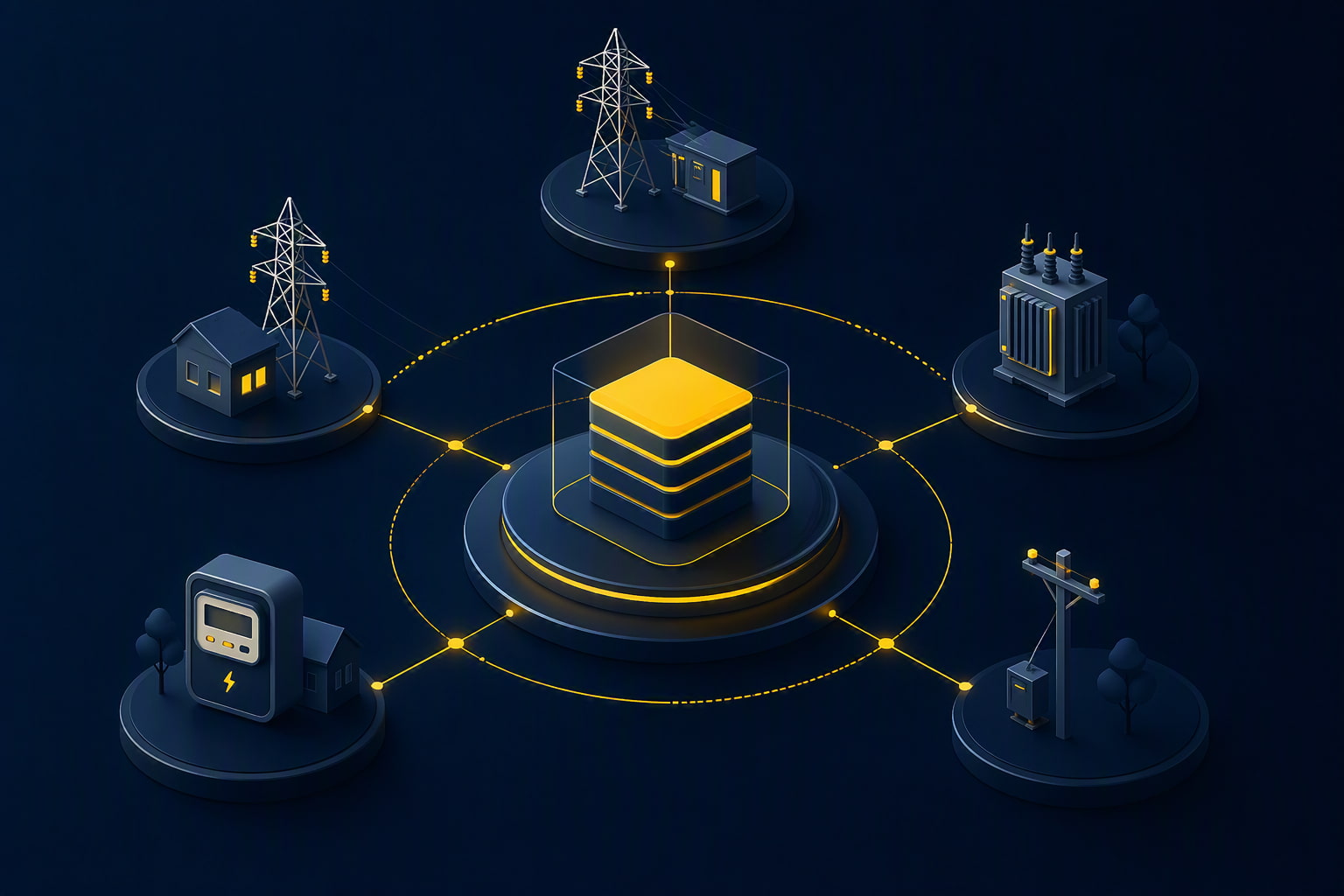
Working together, MODUS X and the DTEK Grids team implemented a unified SAP IS-U/CRM platform across all distribution companies, covering everything from customer service requests to billing and settlement processes. SAP IS-U automates billing, metering, accounting, and settlements, while SAP CRM supports contact centers, customer service centers, and request management. Together, these modules create a single digital backbone for customer-facing and operational processes.
The final stage of the program was the implementation of SAP IS-U/CRM at DTEK Kyiv Regional Grids, completing the rollout of a unified digital customer accounting and service platform across the entire DTEK Grids distribution business.
This case explores how to standardize dozens of business processes across a complex enterprise, execute a large-scale organizational transformation, and successfully deploy a mission-critical solution under wartime conditions—while delivering measurable business results.
Before drafting the first technical requirement, the team clearly defined the project's purpose. The business objective was to create a universal digital foundation that would ensure consistent service quality across all regions, full operational transparency, minimal manual effort, and the ability to quickly introduce innovations.
Key success criteria were measurable: automation of more than 145 business processes, integration with over 30 external systems, a unified customer database, billing speed and accuracy, scalability, and growth in the Customer Satisfaction Index (CSI). These metrics were documented in SAP Solution Manager, validated through annual audits, and CSI became the primary indicator of digital solution effectiveness.
Innovation was reflected in the comprehensive automation of interaction with the national DataHub platform (automated disconnections and reconnections, data routing), a digital power quality management tool, online payments, digital address directories, and mobile applications for field personnel.
Throughout 2024, requirements were collected through multi-level working sessions involving representatives from all DSOs, key users, and process owners. The work was divided into stages: analysis of existing processes, identification of pain points, definition of target service models, and assessment of regulatory requirements. For each process group, an AS-IS → TO-BE matrix was developed to identify gaps and development priorities.
The process was highly inclusive, involving key users from all regions, business analysts, IT architects, SAP technical experts, and external MODUS X consultants. Technical requirements underwent multiple levels of review: SAP architects designed integration concepts, cybersecurity teams defined security requirements, and access rights were governed by Segregation of Duties (SoD) matrices and centralized CUA roles. Technical feasibility was validated through pilot integration testing with DataHub, ERP, and PowerOn.
Project governance was based on a clearly defined structure: a steering committee approved key decisions and budgets; the PMO coordinated project execution; the architecture board ensured compliance with SAP standards; and key-user groups tested and implemented processes within their business units.
Communication was transparent and regular, including weekly status meetings, monthly executive steering committees, thematic workshops, solution demonstrations, and retrospectives. The team had real decision-making authority to prioritize functionality, initiate Change Requests, approve architectural decisions, and influence release planning. This governance model enabled the project to remain manageable despite wartime risks and market instability.
The project followed a five-phase implementation model: preparation, conceptual design, development, testing, and production go-live. Each phase produced clearly defined deliverables, including process models, technical architecture, integration specifications, test scenarios, and data migration plans. Schedule feasibility was validated through resource workload assessments, capacity planning, and load simulations for critical processes such as billing and DataHub integrations.
The most significant changes arose from expanding the project scope from three to five DSOs and from wartime risks, which required continuous schedule adjustments and resource reallocation. Budget control was maintained through the reuse of templates and minimizing unnecessary customizations. All progress, risks, and defects were tracked in SAP Solution Manager and internal dashboards.
A project of this scale involved 17 business analysts, 11 IT specialists, a team of SAP experts, and external MODUS X consultants. Team members were selected based on their professional expertise, SAP IS-U/CRM experience, and understanding of energy-sector processes.
Key users in local business units played a particularly important role. They participated in process modeling, testing, and the rollout of new implementation waves, trained colleagues, and maintained data quality. This approach ensured project sustainability and minimized knowledge-related risks within a large organization. Motivation was supported through clear instructions, user KPIs, recognition of achievements, and active involvement of the team in planning activities.
The project methodology combined the structured ASAP framework for major implementation phases with Agile practices for development flexibility, while SAP Solution Manager served as the primary platform for documenting processes, tests, and control checkpoints. Quality assurance was supported through architecture reviews, multi-level testing plans (unit and integration testing), acceptance criteria control, internal audits, and regular retrospectives.
The team built most processes using standard SAP IS-U/CRM functionality. Custom developments were implemented only where Ukrainian regulatory requirements or market processes had no equivalent in the standard solution — for example, specific documentation for service disconnections, power quality management requirements, and the interaction model with DataHub. Every deviation from standard functionality was reviewed by the architecture board from the perspective of scalability and long-term support costs.
Risk management was systematic and structured, relying on a centralized risk register, weekly status assessments by the PMO, and escalation of the most critical issues to the steering committee.
The project team focused on four key risk categories:
The transition to production was carefully prepared through data migration, functional and integration testing, performance validation, and training for technical personnel and support teams. Following go-live, a multi-level support model was established, involving key users, internal IT teams, and external consultants.
Since the redesigned processes required new skills and ways of working, a large-scale Organizational Change Management (OCM) program was carried out in parallel. This included communication campaigns, employee training, creation of new roles, organizational restructuring, and active leadership engagement.
More than 2,344 DSO employees completed training programs. The establishment of dedicated Quality Management and Complaints Management departments standardized customer service oversight, while progress was monitored through CSI indicators, customer request analysis, and SLA reporting.
To optimize costs and implementation timelines, the team minimized custom developments, relied on reusable templates, standardized integration approaches, and centralized data management. During wartime, contracts were additionally optimized and flexible payment schedules were introduced.
Digital service channels reduced the workload on contact centers, while automation lowered operational effort. As a result, customer request processing times decreased, technical processes accelerated, and the need for staff travel was reduced.
At the same time, legislative changes introduced a significant number of new business processes, making it impossible to shorten the overall project timeline. Nevertheless, the team maintained quality and control through standardization and the reuse of proven solutions.
Customer service quality indicators improved, among other factors, due to the implementation of SAP IS-U/CRM as the core platform integrating multiple digital customer communication channels.
The most significant challenges included the war, resource shortages, expansion to additional DSOs, complex integrations, and regulatory requirements. The team successfully addressed these challenges through workforce expansion, role redundancy, intensive business engagement, phased wave-based deployments, and adaptive planning.
“The SAP IS-U/CRM project in the Kyiv region was one of the most operationally complex implementations due to its scale, the number of users involved, and the necessity to maintain uninterrupted customer services. This achievement was made possible by the professionalism of the MODUS X team, close collaboration with our colleagues at DTEK Grids, and strong execution discipline at every stage — from preparation through go-live and stabilization.” — Serhii Maliarenko, Head of SAP, MODUS X
DTEK Grids gained:
The final rollout took place during missile attacks on Kyiv and the surrounding region, daily power outages, and an exceptionally cold winter. Despite martial law, restricted infrastructure access, and risks to personnel, the deployment was completed successfully, as were all previous phases of the expansion program.
“We continue to implement best-in-class solutions that meet modern business requirements. The new platform not only preserved the advantages of the previous system but also expanded capabilities for process control, analytics, and reporting. It has improved customer service efficiency and provided greater transparency in monitoring service request fulfillment timelines.” — Serhii Kavurko, Head of Customer Operations Department, DTEK Kyiv Regional Electric Networks
The SAP IS-U/CRM implementation at DTEK Grids was not merely a technology project. It represented a deep transformation of business processes, the operating model, and employees’ approach to work. A structured best-practice methodology enabled the organization to systematize knowledge and convert challenges into valuable experience that strengthened organizational resilience.
The project’s guiding principle was simple: “People are Everything.” The dedication, expertise, and commitment of the project team and key users ultimately became the decisive factors behind the successful achievement of its goals.
Our manager will respond to your request within one business day.